What Are You Looking For?
During hardware component selection, many engineers wonder: while integer frequencies like 48MHz and 25MHz are easy to remember and source, why do UART, industrial control, and communication devices frequently use 11.0592MHz, 3.579545MHz, 19.6608MHz—all with decimal points? These seemingly scattered fractional frequencies are actually purpose-designed to match communication protocols and integer division requirements. Today, Zhejiang A-Crystal breaks down the underlying principles behind decimal frequencies and provides a practical screening method for common crystal frequencies—save this for your next selection task.
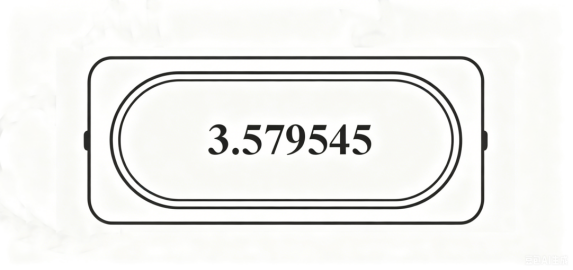
I. Core Design Logic Behind Decimal Crystal Frequencies
As the "digital heart" of a circuit board, the crystal oscillator provides the system's master clock reference. Paired with PLLs and multi-stage divider/multiplier circuits, frequency points are always derived backward from system requirements. The fundamental reason for decimal frequencies is to avoid division errors and ensure communication stability.
1. Adapting to UART Integer Division to Eliminate Serial Communication Errors
The baud rate formula is: Baud Rate = System Clock ÷ Division Factor. Only an exact integer division yields zero-error standard baud rates.
Classic example: For 115200bps standard serial communication, a 1.8432MHz crystal ÷ 16 = 115200bps. Frequencies like 11.0592MHz and 19.6608MHz are specifically tailored for 51-series MCUs and general MCU UARTs, perfectly matching all standard baud rates including 9600, 19200, and 115200. If an integer frequency such as 20MHz is used, fractional remainders appear during division, leading to garbled data and packet loss.
2. Binary Divide-by-2 Architecture for MCU/Industrial Control Clock Chains
Frequencies like 20.48MHz, 10.24MHz, and 5.12MHz are derived from powers of two: 20.48MHz = 2048 × 10kHz. They can be successively divided by two to generate multiple clean clock domains.
Industrial DSPs, PLCs, and servo control systems prefer these frequencies because the divider circuitry can be implemented using simple binary shifts, resulting in extremely low timing errors and minimal circuit complexity—making them a standard choice in industrial control.
3. PLL Synthesis for High-Speed Communications and Sampling Standards
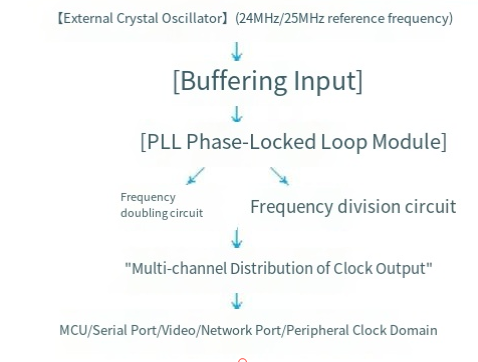
Mainstream SoCs, optical modules, and video chips integrate PLLs that use a base crystal (e.g., 25MHz or 24MHz) as a reference and then generate non-integer frequencies through fractional multiplication/division, such as 25.000625MHz, 74.25MHz, and 33.1776MHz.
74.25MHz: dedicated for video decoding and HDMI formats, matching video sampling clocks;
33.1776MHz: a standard frequency for broadband RF and audio sampling systems.
Although these are labeled with decimals, after PLL conversion they precisely align with protocol-defined sampling rates, making them essential for audio/video and high-speed network interfaces.
4. EMC and Legacy Protocol Constraints
Electromagnetic Compatibility: Integer frequency harmonics often fall within power supply or RF operating bands, causing interference. Decimal frequencies can shift harmonics away, reducing EMI mitigation costs.
Legacy Protocol Standardization: Frequencies such as USB 48MHz, Ethernet 25/125MHz, and RTC 32.768kHz were fixed in early industry standards and have been carried forward across the entire supply chain, becoming de facto industry baselines.
II. Hidden Factors Affecting Crystal Frequency Selection
1) Phase Noise & Jitter
While PLLs can synthesize arbitrary frequencies, non-integer fractional division increases phase noise. In high-speed optical modules and 5G RF applications, native standard-frequency crystals are preferred to minimize signal degradation.
2) Mass Production and Delivery
Customizing niche, non-standard frequencies entails long lead times and higher costs. Whenever possible, standard decimal frequencies should be chosen over custom special frequencies.
3) Domestic Substitution
Today, Chinese crystal manufacturers fully cover mainstream decimal standard frequencies. Zhejiang A-Crystal maintains stock across its entire range of passive and active crystals, covering common non-standard standard frequencies.
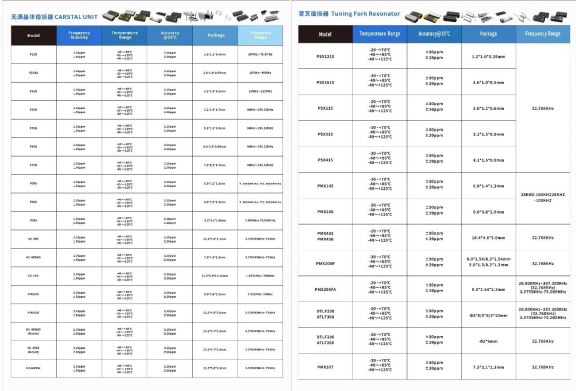
Zhejiang A-Crystal Passive Crystal Oscillator Selection Manual
III. Quick Reference for Engineers: How to Identify Common Crystal Frequencies
When encountering an unfamiliar frequency, apply the following three rules to quickly distinguish between standard off-the-shelf parts and custom-order items:
Rule 1: Compliant with International Standard Protocols
USB: 48MHz; Ethernet: 25MHz/125MHz; Video: 27MHz; RTC: 32.768kHz — these are universally used across the industry and readily available from all major brands.
Rule 2: Capable of Integer Division to Generate Standard Peripheral Clocks
11.0592MHz and 19.6608MHz can output all standard UART baud rates without error, making them perennial best-sellers in the MCU domain.
Rule 3: Included in Mainstream Reference Designs and Mass-produced by Multiple Vendors
If a frequency meets the first two criteria, it is a standard generic frequency and is kept in stock by Zhejiang A-Crystal. If it fails all three, it is a niche non-standard frequency that requires custom tooling and production.
IV. Domestic Full-Frequency Crystal Solutions
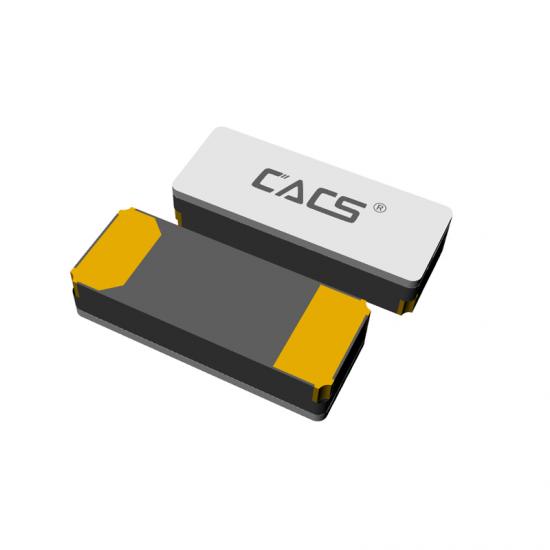
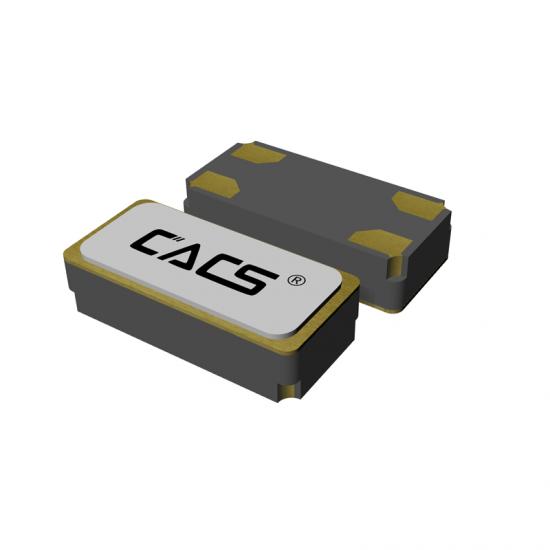
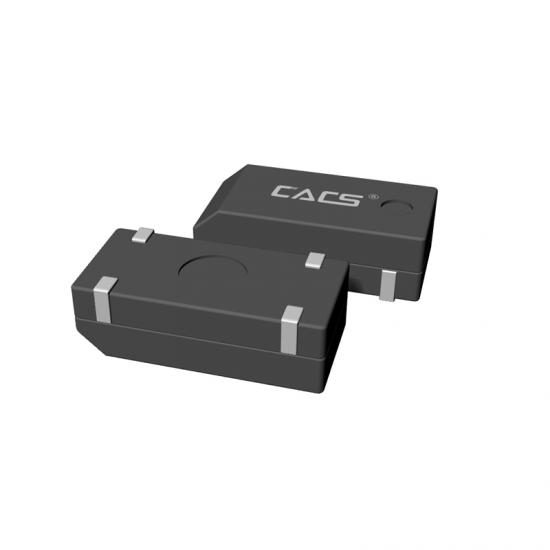
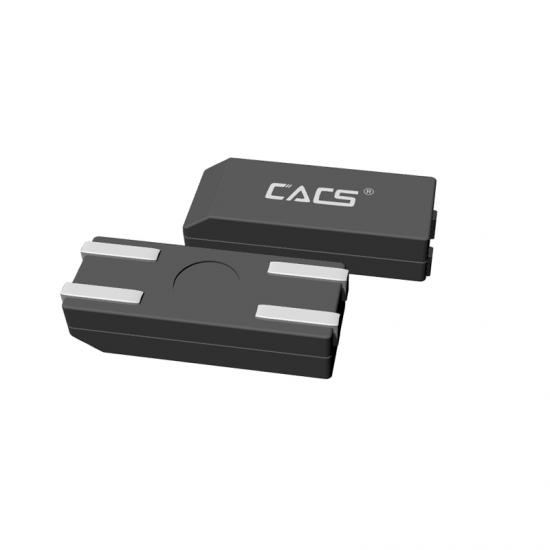
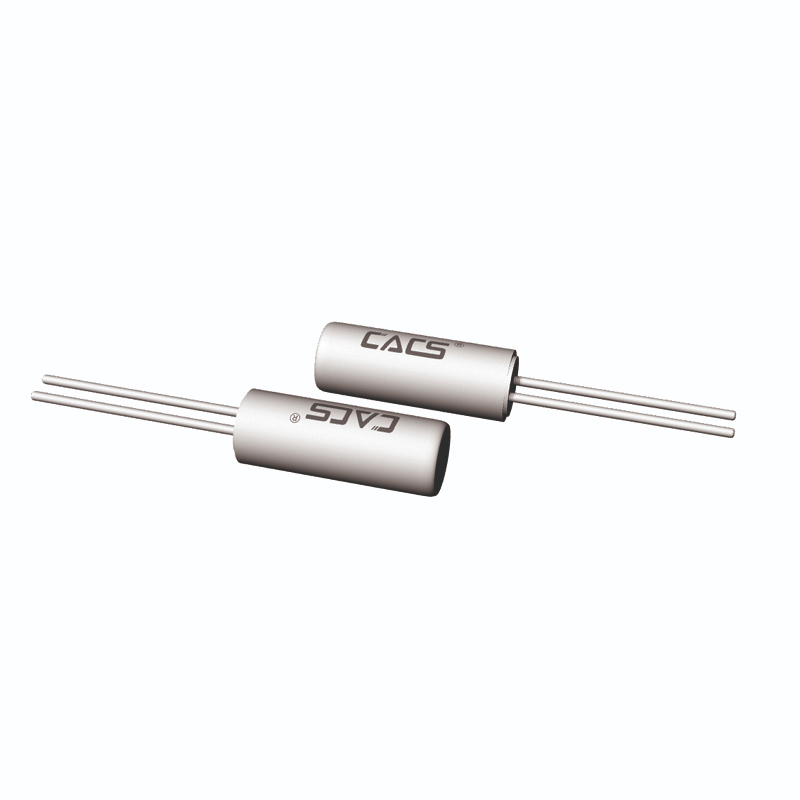
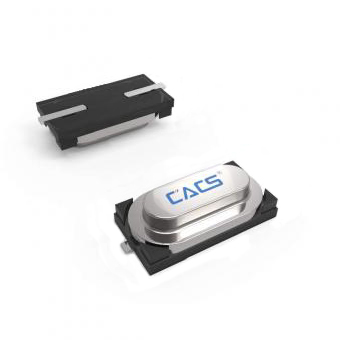
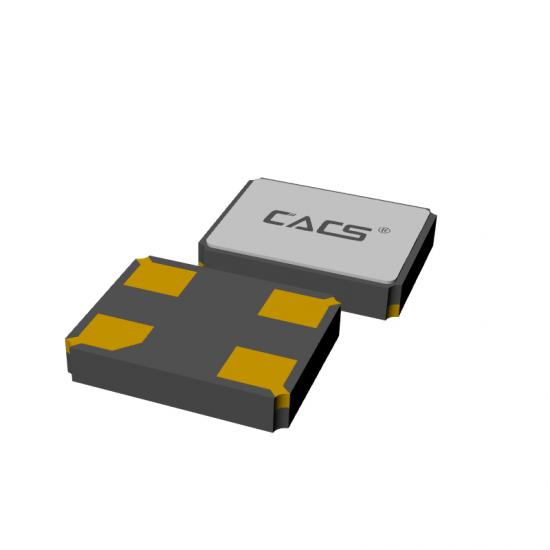
Zhejiang A-Crystal specializes in a comprehensive product line of passive resonators and active oscillators (SPXO, TCXO, OCXO, and differential oscillators). We stock both integer standard frequencies and industry-common decimal frequencies, including 11.0592MHz, 19.6608MHz, 3.579545MHz, 13.52127MHz, 7.3728MHz, and many more. Package options range from miniature SMD types (3225/2520/1612) to full through-hole configurations.
Product Advantages
1. Stock Availability: Common decimal frequencies are scheduled for production based on demand. Small-batch samples can be arranged quickly, and large-volume orders are delivered on time.
2. Performance Control: With our own production lines, we fully control frequency deviation, phase noise, and temperature drift to match top international brands. Our products are suitable for industrial control, automotive, 5G communications, AI servers, and consumer electronics.
3. Customization Services: For niche non-standard frequencies, we support tailored customization—from package type and load capacitance to precision parameters—offering one-stop selection and design support.
Want to know more about A-Crystal’s Technology products?
Need selection the model or technical consultation?
Feel free to contact us via the following methods!
Tel: 0086-576-89808609
Email: market@acrystals.com
Website: [www.acrystals.com](http://www.acrystals.com)


 IPv6 network supported